
Sliding Patio Door Installation Instructions: A Comprehensive Guide (Updated 02/26/2026)
Today’s date is 02/26/2026 12:21:12 (). This guide details a DIY project for homeowners, covering all steps for successful sliding door installation.
Preparation & Tools
Before beginning, thoroughly inspect the new sliding patio door for any damage incurred during shipping. Gather essential tools: a measuring tape, level (both spirit and laser), drill with various bits, screwdriver set, hammer, utility knife, caulk gun, and safety glasses.
You’ll also need shims, construction adhesive, potentially a pry bar for removing the old door, and a circular saw if adjustments to the opening are needed. Confirm the sill width compatibility with the new slider.
Ensure you have appropriate flashing materials for threshold and sill areas, and lumber for boxing floor joists if required. Having a helper is highly recommended, especially when lifting and maneuvering the door panels. Proper preparation minimizes delays and ensures a smooth installation process.
Removing the Existing Door (If Applicable)
If replacing an existing door, carefully detach it from the frame. Begin by unscrewing hinges or tracks securing the door. A utility knife can help sever any caulk or sealant around the perimeter. Gently pry the door loose, being mindful not to damage the surrounding wall structure.
For stubborn doors, a reciprocating saw might be necessary to cut through fasteners. Once removed, inspect the opening for any irregularities or damage. Address these issues before proceeding with the new installation.
Remove all remaining hardware, including tracks, rollers, and locking mechanisms. Clean the opening thoroughly, removing debris and old sealant. Ensure the opening is square, plumb, and level to provide a solid foundation for the new sliding patio door.

Understanding Sliding Patio Door Components
Sliding patio doors consist of several key components. These include the door panels – typically one fixed and one operating – along with the frame, tracks, rollers, and locking mechanisms. The frame provides the structural support, while the tracks guide the sliding action of the panels.
Rollers, located at the bottom of the operating panel, enable smooth movement along the tracks. The locking mechanism secures the door in a closed position, often featuring multiple points for enhanced security.
Understanding the function of each part – like the anti-lift device for security – is crucial for proper installation and future maintenance. Familiarize yourself with the specific components of your Deceuninck Slider 24 or similar model before beginning the installation process.
Sill and Threshold Considerations
Proper sill and threshold installation is vital for weatherproofing and structural integrity. Ensure the new slider’s sill width matches the existing window opening, as this directly impacts threshold support. Careful flashing around the threshold prevents water intrusion, a common issue if neglected.
Boxing the floor joists may be necessary to achieve a level surface for the threshold. This involves building up the floor framing to match the door’s height requirements. The sill and brick opening should align precisely with the door unit size, allowing for only two caulk joints.
Accurate measurements and meticulous sealing are key to a long-lasting, watertight installation.
Sill Width Compatibility
Determining sill width compatibility is the first step in a successful installation. Was the original stone sill the same width as the new sliding door? This is crucial; if the existing sill supported the previous window, the widths must match to properly support the new threshold.
Incompatibility necessitates adjustments, potentially involving shimming or modifying the opening. A precise fit ensures the threshold remains level and stable, preventing future issues like water leaks or operational difficulties. Ignoring this step can compromise the entire installation.
Double-check measurements before proceeding, confirming the sill width aligns perfectly with the door unit’s specifications.
Threshold Flashing & Boxing Floor Joists
Proper threshold flashing and boxing of floor joists are vital for preventing water damage and ensuring long-term durability. How much did you need to “box” the floor joists to accommodate the new threshold? This involves creating a framed opening to support the threshold and provide a secure, weatherproof seal.
Flashing—applying waterproof material—around the threshold prevents moisture intrusion. The sill and window brick opening should match the door unit size, plus allowance for two caulk joints. Careful attention to these details is paramount.
Ensure the flashing extends beyond the sill to effectively channel water away from the structure.
Initial Frame Installation
Begin by carefully positioning the sliding patio door frame within the prepared opening. Ensure it’s square, plumb, and level – these are critical for smooth operation and weather-tight sealing. Use shims strategically to achieve perfect alignment, checking both vertically and horizontally.
Once the frame is properly aligned, secure it temporarily with screws. Do not fully tighten them yet, as minor adjustments may still be needed during the installation process. Verify the frame remains stable and doesn’t shift during this initial fastening stage.
Double-check measurements against the opening before proceeding to the next step.

Installing the Anti-Lift Device
The anti-lift device is a crucial security feature, preventing forced entry by stopping the panel from being lifted off the track when locked. Locate the head portion of the door frame, above where the operating panel will slide.
Slide the door panel to its fully open position to access the designated area for the anti-lift installation. Snap the vinyl anti-lift piece firmly into the head section, positioning it approximately one foot from the jamb, as illustrated in Fig. 27.
Ensure a secure and audible ‘snap’ confirms proper engagement. This simple step significantly enhances the door’s resistance to intrusion.
Anti-Lift Location & Securing
Precise placement of the anti-lift device is paramount for optimal security. It must be installed within the head portion of the door frame, directly above the path of the sliding panel. Positioning it roughly one foot from the jamb, as depicted in Figure 27, provides effective resistance against lifting attempts.
When snapping the vinyl piece into place, listen for a distinct ‘click’ or ‘snap’ sound. This confirms secure engagement within the frame’s receiving channel. Visually inspect the device to ensure it’s fully seated and flush with the surrounding surface.
A properly secured anti-lift device adds a vital layer of protection against potential intruders, bolstering the overall security of your sliding patio door.
Sliding Panel Insertion
With the frame securely in place and the anti-lift device installed, carefully begin the sliding panel insertion process. Gently lift the panel, ensuring it’s aligned with the upper track within the header. Angle the bottom of the panel slightly inward to engage the lower track.
Once the bottom rollers make contact with the lower track, smoothly guide the panel into the frame. Avoid forcing the panel, as this could damage the rollers or the track itself. A gentle, even pressure is key.
Continue sliding the panel until it reaches its full closed position. Verify that the panel moves freely within the tracks, indicating a proper installation.
Adjusting Door Panel Rollers
Proper roller adjustment is crucial for smooth sliding door operation and a weather-tight seal. Begin by lifting the door panel slightly to minimize roller weight during adjustment, making fine-tuning easier and preventing strain. Locate the adjustment screws on the lower portion of the door panel.
Turning these screws will raise or lower the rollers, impacting the panel’s alignment. Achieving plumb and level alignment is the goal; use a level to check both vertical and horizontal planes. Adjust until the door slides effortlessly without binding or dragging.
Ensure consistent contact between the rollers and the tracks along the entire length of the door’s travel.
Minimizing Roller Weight During Adjustment
Reducing the load on the rollers significantly simplifies the adjustment process, allowing for more precise control and preventing unnecessary strain on both the rollers and the door frame. To achieve this, gently lift the door panel upwards before attempting any adjustments.
Even a slight lift can dramatically decrease the effective weight borne by the rollers, making it easier to turn the adjustment screws and observe the resulting changes in alignment. This technique is particularly helpful for heavier door panels.
Support the door securely while lifting to ensure stability and prevent accidental slippage during the adjustment procedure.
Achieving Plumb and Level Alignment
Precise plumb and level alignment are crucial for smooth sliding door operation and optimal weather sealing. After minimizing roller weight by lifting the panel slightly, carefully turn the lower adjustment screws. These screws directly influence the door panel’s vertical and horizontal positioning.
Continuously monitor the door’s alignment with a level and plumb bob, making small, incremental adjustments to avoid overcorrection. The goal is to ensure the door panel sits perfectly flush against the frame, without any binding or gaps.
Consistent checking guarantees a seamless fit and prevents future operational issues.
Weatherproofing and Sealing
Effective weatherproofing is vital for energy efficiency and preventing water damage. After the door is aligned, meticulously inspect all gaps around the frame and threshold. Apply a high-quality, exterior-grade sealant to create a watertight barrier.
Pay close attention to corners and areas where different materials meet, ensuring complete coverage. The Deceuninck Slider 24 patio door is designed for superb weather resistance, but proper installation sealing maximizes its performance.
Inspect threshold flashing and ensure it’s correctly installed to divert water away from the door opening. A well-sealed door significantly reduces drafts and maintains a comfortable indoor climate.
Door Alignment and Smooth Operation Checks
Once installed, thoroughly check the door’s alignment and operational smoothness. Slide the panel across the entire track, observing for any binding or resistance. Adjust the rollers (lower screws) as needed to ensure plumb and level alignment with the frame.
Lift the door panel slightly to minimize weight on the rollers during adjustment, facilitating easier movement and precise leveling. A properly aligned door should glide effortlessly without requiring excessive force.
Verify the locking mechanism engages smoothly and securely. Address any sticking points or unevenness immediately to prevent future operational issues and maintain the door’s longevity.
Lock Mechanism Installation & Testing
After the door panels are aligned and moving smoothly, install the lock mechanism according to the manufacturer’s instructions. Ensure all components are securely fastened and properly aligned within the designated openings.
Thoroughly test the lock from both the interior and exterior to confirm smooth operation and secure engagement. Verify that the locking points fully extend and retract without obstruction.
Check for any interference between the lock and the door frame or panel. Address any issues immediately to maintain security and prevent damage to the locking system. A properly functioning lock is crucial for the door’s security.
Addressing Common Installation Issues
During installation, you might encounter issues like misaligned panels or difficulty with roller adjustment. If panels bind, re-check the frame’s plumb and level, and readjust the rollers, lifting the panel slightly to minimize weight during adjustments.
Water leaks can occur if the threshold isn’t properly flashed or the sill width is incompatible. Ensure proper flashing and boxing of floor joists. Verify the sill width matches the opening.
If the anti-lift device doesn’t snap in easily, confirm correct positioning approximately a foot from the jamb. A secure anti-lift is vital for security. Address these promptly for a lasting, functional installation.
Sliding Door Dimensions & Standard Sizes
Sliding patio doors are available in various sizes, but a standard dimension is 6 feet wide by 80 inches tall. These dimensions are designed to accommodate most common patio openings, providing an expansive view without compromising structural integrity.
However, precise measurements of your opening are crucial before purchasing. The sill and window brick opening should ideally match the door unit size, allowing for approximately two caulk joints for a proper seal.
Custom sizes are often available to fit unique openings. Always double-check measurements and consider the need for shimming during installation to ensure a perfect fit and smooth operation.
Typical 6ft x 80in Dimensions
A 6ft x 80in sliding patio door offers a generous opening, commonly fitting standard patio spaces. This size provides an unobstructed view and easy access to outdoor areas, enhancing the flow between indoor and outdoor living.
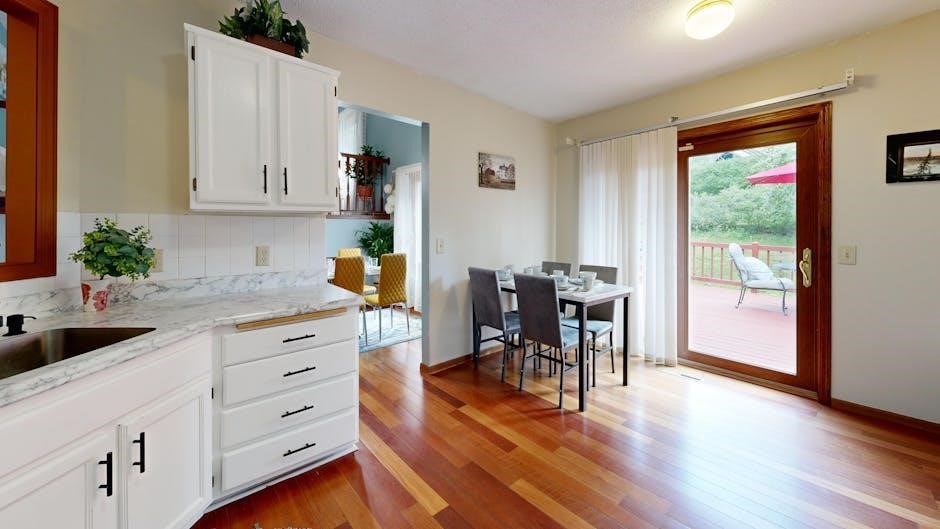
These dimensions typically allow for a comfortable passage and accommodate standard furniture arrangements. However, verifying the rough opening is vital; it should match the door unit size plus allowances for shimming and sealant – roughly two caulk joints.
Consider the door’s impact on room aesthetics and functionality. A 6ft width balances spaciousness with efficient use of wall space, making it a popular choice for many homes;
Weather Resistance Features
Sliding patio doors are engineered to withstand diverse weather conditions, ensuring home comfort and energy efficiency. The Deceuninck Slider 24, for example, boasts superb weather resistance, crucial for maintaining a stable indoor climate.
Proper installation, including meticulous sealing and flashing around the sill and threshold, is paramount. This prevents water infiltration, drafts, and potential damage. High-quality weather stripping around the door panels further minimizes air leakage.

Features like robust frames and durable glass contribute to overall weather protection. Selecting doors with appropriate U-factors and SHGC ratings optimizes thermal performance, reducing energy costs.
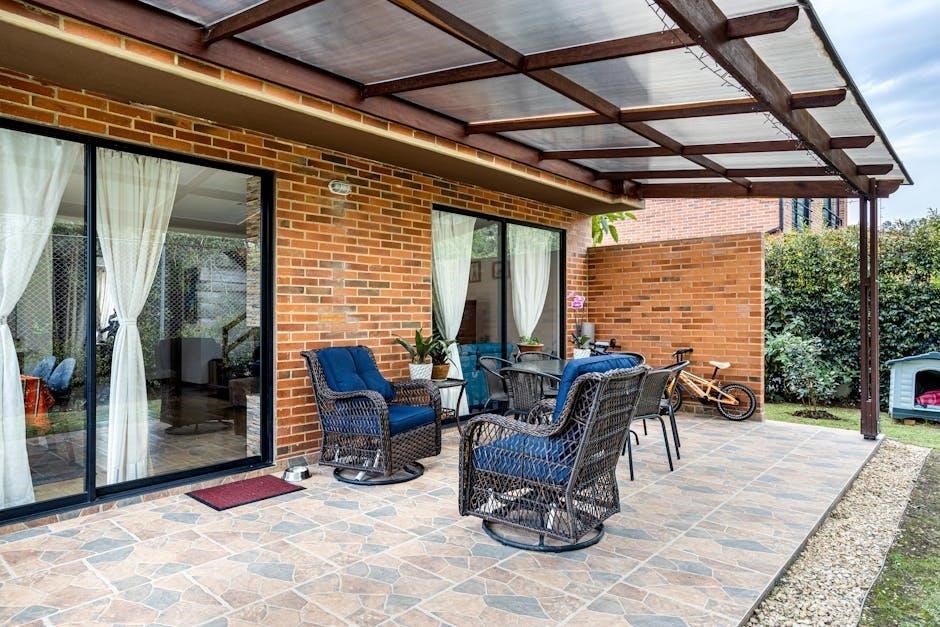
Deceuninck Slider 24 Patio Door Specifics
The Deceuninck Slider 24 patio door is recognized for its durability, low threshold, and excellent weather resistance. This model offers superb levels of performance, making it a popular choice for homeowners.
Installation guides, like those available on homedepot.plygemwindows.com, provide detailed step-by-step instructions specifically tailored to this door. Key aspects include proper roller adjustment – lifting the panel slightly to minimize weight during adjustment for plumb and level alignment.

The anti-lift device, a crucial security feature, snaps into the head section approximately a foot from the jamb. Careful attention to sill width compatibility and threshold flashing are also vital for a successful installation.
Safety Precautions During Installation
Prioritize safety throughout the sliding patio door installation process. Wear appropriate safety glasses to protect your eyes from debris, and work gloves to shield your hands during handling of door components and tools.
When removing an existing door, exercise caution to avoid injury from broken glass or sharp edges. Ensure the work area is clear of obstructions and well-lit.
During lifting and maneuvering of the door panels, utilize proper lifting techniques to prevent strain or back injury. If assistance is needed, enlist a helper. Always follow manufacturer’s instructions and local building codes for a secure and compliant installation.
Final Inspection & Clean-Up
Complete a thorough inspection of the newly installed sliding patio door. Verify smooth operation of the sliding panels, ensuring they move freely and lock securely. Check all weatherproofing and sealing to confirm a tight fit, preventing drafts and water intrusion.
Inspect the anti-lift device to ensure it’s properly engaged, enhancing security. Test the lock mechanism multiple times to confirm functionality.
Finally, clean the door and surrounding area, removing any debris or installation materials. Dispose of waste responsibly. A final walk-through ensures a professional finish and a secure, weather-resistant sliding patio door.